top of page
About the project
In January 2025, we shipped a brand new experience for the Qualys Platform which is being used by over 10,000 subscription customers across more than 130 countries, including a majority of the Forbes Global 100 and Fortune 100 companies.
The redesign significantly improved user efficiency, reduced task completion times by 40%, and led to a 42% increase in overall satisfaction.
My role
Responsible for research & leading conceptualisation, visual design & user testing.
Timeline
Feb 2024 - Dec 2024
Our approach

Redesigning the Qualys Platform
Modernizing the platform for better user engagement and efficiency

Business objectives of the revamp

Understanding the issues users are facing
Speaking to some Qualys users was super insightful and helped us to pin point major issues with the current UI apart from just the visuals.

Taking a look at the competition
After gathering user issues and feedback, I collated Navigation examples from some our key competitors

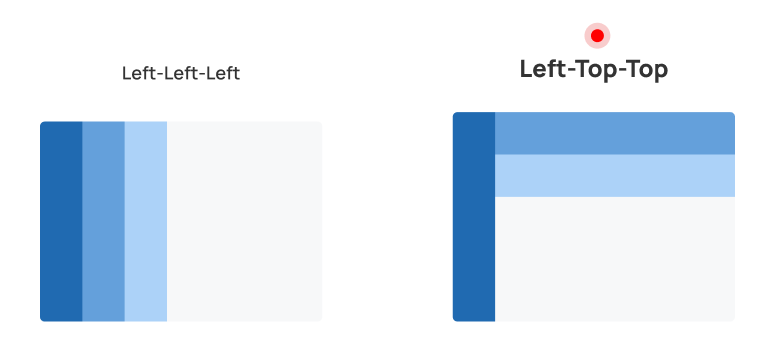
Among the most used navigation patterns, I found that quite a few players in the cybersecurity space are following Left-Top-Top Navigation pattern.
Primary Goals for UX


I also did a detailed comparison of the UI elements used across the cybersecurity products for inspiration and ideas that can be implemented to enhance the Qualys Platform.
Iterative Improvements
for a Seamless Transition
We focused on delivering the most critical UX improvements first, while strategically introducing additional enhancements to optimize adoption and minimize friction.

Early user feedback
A user flow was designed for A/B testing, incorporating two finalized visual design strategies. This flow required users to interact with the revamped navigation and redesigned UI elements.

Wireframing for ideas

Once the key areas for improvement were clear, I explored high-level navigation and layout concepts to build a strong foundation.
After discussions with the team and stakeholders, we moved forward with 2 options that best aligned with our UX goals.
Defining the foundational elements
Before jumping into high-fidelity designs, I focused on setting up the core building blocks that would shape the new experience.

I refined our color palette and introduced more colors options while ensuring proper contrast and readability.

The icon library, with over 500 icons, was updated to match the new visual style, and text style tokens were defined to maintain consistency across all layouts.

I also led the work on our design system which consists of
70+ configurable components with multiple variants for easier global updates and a more systematic approach to scaling design changes.
Bringing it all together
With the core elements in place, we brought everything to life with high-fidelity designs.

The final screens feature a cleaner layout, improved navigation, and thoughtful interactions that make the platform easier to use and more visually engaging.
A better experience, proven results
The new UI launched with announcement of Qualys Enterprise TruRisk Management which received overwhelmingly positive feedback at QSC, reinforcing Qualys’ market leadership.

User feedback at QSC was overwhelmingly positive, with a 42% increase in satisfaction scores.
A built-in feedback option allowed users to share input while transitioning. Only 2% of the users opted to switch back to the old UI.
85% of users had a seamless experience with the new UI and reported no issues.
Many existing customers showed strong interest in becoming design partners, and we also attracted several promising potential leads.

We worked on all the distinct layouts that exist in the platform and targeted the most common and critical components for Phase 1 of the release.

bottom of page